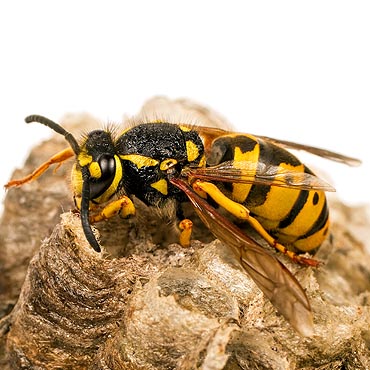
Being stung by a wasp can be very painful, for some it can be life - threatening if you are allergic to stings.
Wasps are often mistaken for bees and are also confused with other stinging insects. Wasps are most active in the summer months.
In the U.K., the common wasp and German Wasp cause the most annoyance and painful stings.
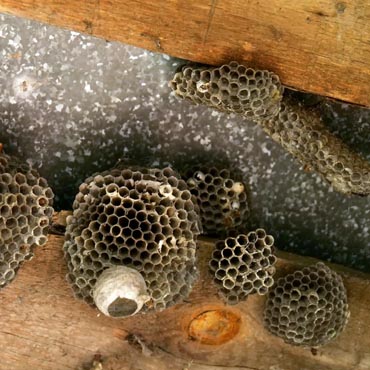
If you have noticed a wasp infestation please contact PEST HUNTERZ, our professional technicians have the experience and correct protective clothing to deal with the wasp infestation.
Warning: Do not attempt to remove a wasp nest yourself, this can be highly dangerous and is not recommended. Disturbing a nest can provoke a swarm, leading to painful stings and potential medical emergencies.
Wasps treatment
Once you have spotted the signs of a wasp infestation our experienced qualified wasp technician will carry
out an inspection prior to treatment to identify the wasps you are dealing with. Other species can often be confused with wasps such as bees.
Depending on the situation and the location of the wasp nest, our technicians will apply insecticides spray or dusts.
Preparation for wasp treatment
The following are steps you need to take before the wasp technician arrives:.
1
Before the wasp removal service
Don't get too close to the nest and wait for the professional to arrive and investigate. The wasp exterminator will be able to determine if you have got a wasp nest or a bee colony on your property.
2
After the removal of the wasp nest
Avoid touching the freshly treated nest.
Keep children away from the wasp nest.
Don't remove the nest for at least a couple of days.
Honey Bees
Most of the time wasps can be confused with bees, in particular honey bees. However bees vary in colour from almost black to golden brown and are furrier than wasps. If you suspect you have honey bees, visit the British Bee Keepers Association to find a swarm collector.